Lava Flow
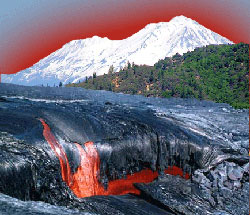
Hot magma from deep under the earth has erupted around Mt. Shasta many times over the last 500,000 years. During this long history, there was an eruption from the base of Mt. Shasta.
Huge amounts of very liquid lava bubbled up from deep below the earth, and came to the surface at Everitt Hill, a few miles north of the Mott Airport. This very liquid lava rolled, reaching heights fifty to seventy-five feet tall, down the earlier version of the Sacramento River canyon for 40 miles. This massive flow of lava filled the existing river canyon, covering the existing river, and incinerating all that it passed. Much of the town of Dunsmuir, California sits on top of this ancient lava flow.
After the lava cooled and solidified, most of the water that had been in the original river began to flow over the top of the new lava, carving a new course - creating the Sacramento River canyon that we know today. But some of the water in the old river bed came from deep underground, and that water created springs where it seeped through the new lava. The most dramatic place where the new river bed carved down and crossed the old river bed is at Mossbrae Falls. There, a torrent of water following the old river bed meets the air twenty to thirty feet about the current Sacramento River, forming a beautiful set of moss and fern-covered waterfalls.
Where the water that came up in these new springs passed through mineral deposits in its long journey to the surface, the water retained the mineral flavoring, and rose to the surface as "mineral water."
Upper Soda Springs and the other springs along the Upper Sacramento may be a reminder of the earlier river and its creeks, before this great lava flow ago covered it all.